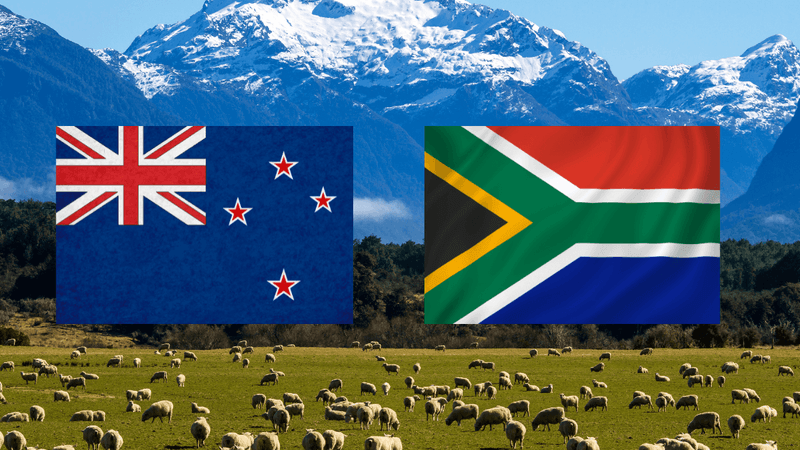
New Zealand is home to one of the largest South African diaspora communities in the world. With an estimated 60,000 to 70,000 South African-born residents, Saffers have woven themselves deeply into the fabric of Kiwi society — from the rugby fields to the neighbourhood braai scene. If you're a South African who has just landed, or is planning to make the move, this guide is for you.
Two countries with rugby in their DNA, a love of the outdoors, and an easy-going attitude toward life — South Africa and New Zealand have more in common than most migrants expect. But the differences, when they hit, can be surprisingly stark. This guide covers the South African community in New Zealand, where to find your people, how to source the foods you miss, and the cultural shifts that catch most Saffers off guard.
How Many South Africans Live in New Zealand?
South Africa consistently ranks among the top five source countries for New Zealand immigration. According to Statistics New Zealand, South African-born residents number between 60,000 and 70,000, making them one of the most established migrant communities in the country. This number has grown steadily over the past two decades, with notable increases during periods of heightened crime concern and economic instability in South Africa.
South Africans are spread across New Zealand but are most concentrated in:
- Auckland: The largest South African population, particularly in the North Shore suburbs of Milford, Takapuna, Browns Bay, and Albany
- Wellington: A strong professional SA community, particularly in government and technology sectors
- Christchurch: Growing fast, with many South African construction professionals who stayed on after the earthquake rebuild
- Hamilton and Tauranga: Popular choices for families seeking more space and affordability
The concentration in Auckland's North Shore is so pronounced that locals sometimes jokingly call the area "the 10th province." If you've moved to the Shore and haven't yet heard a South African accent at the school gate or the local rugby club, give it a week.
Finding Your South African Community
One of the most common concerns South African migrants have is loneliness and disconnection — particularly in those first months before routines and friendships develop. The good news is that the SA community in New Zealand is exceptionally well-organised and genuinely welcoming.
Facebook Groups: Your First Stop
Facebook is where the South African community in New Zealand lives. These groups are active, supportive, and packed with practical advice from people who've already navigated exactly what you're going through. Key groups to search for and join include:
- South Africans in New Zealand — the largest general community group, with tens of thousands of members
- South Africans in Auckland — city-specific with active daily posting
- South Africans in Wellington and South Africans in Christchurch — region-specific communities
- South African Moms in NZ — extremely active group for families, school recommendations, and parenting advice
- South Africans Buying and Selling in NZ — classifieds-style group for finding SA goods, furniture, and more
- Braai NZ and regional braai groups — for those who take their fire seriously
Don't underestimate these groups. They're where you'll find a plumber who understands what you mean when you say you need someone to check the geyser, a doctor recommended by other Saffers, and a dentist with fifty glowing community reviews. They're also where you'll find community events, get school advice, and receive genuine moral support on harder days.
South African Clubs and Associations
Beyond social media, there are formal organisations supporting the SA community in New Zealand:
South African Society of Auckland: One of the oldest SA associations in NZ, organising cultural events, braais, and social gatherings. A great way to meet established South Africans who have been in NZ for years and can offer real wisdom about the journey ahead.
South African Club Wellington: Similar function in the capital, with regular social events and a supportive network for new arrivals.
Afrikaans-speaking communities: If Afrikaans is your home language, you'll find dedicated groups connecting Afrikaans speakers across New Zealand, from church communities to informal braai circles.
Churches and Faith Communities
For many South Africans, church is central to community life. This translates well to New Zealand, where a number of churches have significant South African membership or even SA-specific congregations. Searching for churches with South African pastors or strong SA congregations in your area is worth doing early — the community bonds formed through church often become some of the deepest and most enduring friendships new migrants form.
Rugby Clubs
This one almost goes without saying. South Africans and rugby are inseparable, and New Zealand rugby clubs are one of the fastest paths to genuine local connections — with Kiwis and other expats alike. Whether you're playing or just watching, showing up to a local club on a Saturday is a proven shortcut to community. Your children playing rugby or netball through a local club is equally powerful for integrating the whole family.
The Braai in New Zealand: What You Need to Know
Let's address the elephant in the room — or more accurately, the fire in the backyard. The braai is more than a cooking method for South Africans; it's a social institution, a ritual, and a primary vehicle for community. The good news is that New Zealand's outdoor lifestyle is entirely compatible with braai culture. The difference is that the Kiwi equivalent — the barbecue, or "barbie" — operates on somewhat different principles.
Braai vs Barbie: The Cultural Gap
For Kiwis, a barbecue typically involves a gas grill, sausages (called "snags"), and burgers. It's casual, quick, and more about the food than the fire. The South African braai, by contrast, is built around wood or charcoal, takes time, centres on the process as much as the product, and is treated as a properly social event where people gather around the fire from lighting to last ember.
Most South Africans in New Zealand simply transplant their braai culture intact. You'll find SA households with proper Weber kettles, barrel braais, or even imported SA-style braai stands in their backyards. Kiwi neighbours quickly come to appreciate an invitation to a real braai — and many end up converted.
A few practical notes on braaiing in New Zealand:
- Fire restrictions: Some regions have seasonal fire bans, particularly in dry summer months. Always check local council rules before lighting up outdoors — this catches many new arrivals off guard
- Wood supply: Hardwood suitable for braais is available but requires knowing where to look. Firewood suppliers exist throughout NZ, and SA community groups regularly share recommendations for good braai wood sources
- Apartment living: If you're renting an apartment, open-flame braais are typically not permitted on balconies. Many Saffers in apartments use gas or electric options until they move to a house
- The weather: New Zealand weather is famously changeable. A planned braai can be ambushed by wind or rain with minimal warning — have a contingency plan and a sense of humour
Community Braais
One of the most popular things South African community groups organise is the community braai — large gatherings where dozens or even hundreds of Saffers come together for a day of fire, food, Afrikaans music, and familiar faces. These events are particularly meaningful in the early months when homesickness can be acute. Following your local SA Facebook group will keep you informed of upcoming events.
Finding South African Food in New Zealand
This is one of the most-searched topics among newly arrived South Africans, and for good reason. The loss of familiar foods — biltong, boerewors, koeksisters, Ouma rusks, Mrs Ball's Chutney — is a surprisingly emotional experience. The smell of boerewors on a braai is the smell of home, and finding it in New Zealand feels like a small victory.
South African Specialty Stores
New Zealand has a small but growing number of dedicated South African food importers and specialty stores. These businesses exist specifically to serve the SA community and stock the products you're missing. Rather than listing specific stores (which change over time), the best approach is to search your local SA Facebook group for current recommendations — members regularly update each other on which stores are stocking what and where.
In Auckland, the North Shore and surrounding suburbs have the highest concentration of SA food suppliers given the large SA population in that area. Wellington and Christchurch also have established suppliers, though the selection may be smaller.
What You Can Find in NZ
- Biltong: Available from SA specialty stores and some online suppliers. A number of South Africans in NZ have started small biltong-making businesses — check Facebook groups for local producers. Quality varies significantly, so community reviews matter
- Boerewors: Several butchers — including some SA-owned — make boerewors in New Zealand. Community recommendations are your best guide. It's also achievable to make your own with the right spice mix
- Droewors: Available from SA stores and online, though less common than biltong
- Ouma Rusks: Occasionally stocked at SA specialty stores and sometimes found in the international food sections of larger supermarkets
- Mrs Ball's Chutney: Available at many South African stores and some international food sections
- Nando's: New Zealand has Nando's restaurants, so the peri-peri fix is well covered
- Rooibos tea: Widely available in New Zealand supermarkets and health food stores — this one is well sorted
- Amarula: Available at New Zealand liquor stores (called "bottle shops")
What You Won't Find Easily
Some beloved SA foods simply aren't reliably available in New Zealand. Koeksisters from a proper SA baker, fresh vetkoek, samoosas that taste right, mielie bread, and many snack foods fall into this category. The silver lining is that most of these are makeable at home, and the SA community enthusiastically shares recipes and baking days. Many South Africans find that learning to cook these things becomes a meaningful connection to home and heritage.
The Suitcase Import Tradition
Every South African who returns from a visit home arrives at Auckland Airport with a suitcase optimised for food imports. Biltong, spice mixes, specific chips, koeksister syrup, and specific sauces are standard cargo. New Zealand customs has strict biosecurity rules — fresh meat, dairy, and certain plant products are prohibited — but dried, commercially packaged goods are generally fine. Always declare items at the border and check the MPI (Ministry for Primary Industries) guidelines to avoid confiscation and fines.
Cultural Differences That Surprise South Africans
South Africans generally adapt to New Zealand relatively smoothly — shared language, similar outdoor lifestyle, mutual rugby obsession, and comparable family values create natural points of connection. But there are cultural differences that consistently catch Saffers off guard, and being prepared for them makes the transition significantly easier.
The Kiwi Reserve
South Africans tend to be direct, warm, and socially extroverted. You'll introduce yourself enthusiastically, make conversation easily, and assume that friendliness signals friendship. Kiwis are friendly — genuinely so — but they are also more reserved than South Africans in the early stages of a relationship. A Kiwi being pleasant to you at school pickup does not automatically mean they want to be your friend. Friendships tend to develop more slowly and quietly than in South Africa.
This can feel like rejection when it isn't. Many South Africans describe a frustrating first year where they felt socially isolated despite everyone around them being perfectly nice. The key is patience and consistency — showing up repeatedly to the same sports clubs, neighbourhood events, and workplaces until the slow-burn of Kiwi friendship reaches its natural warmth. It does happen; it just takes longer than South Africans are used to.
Directness and Conflict Avoidance
New Zealanders are conflict-averse in ways that can baffle South Africans. A Kiwi who is unhappy with something will often not say so directly — they'll go quiet, pull back, or give non-committal answers rather than raising the issue. South Africans, accustomed to more direct communication, sometimes misread this silence as agreement or take it personally without understanding what's happening.
In the workplace, this means feedback can be indirect, and a Kiwi saying "yeah, that could work" might actually mean "I have significant reservations." Learning to read between the lines — and softening your own directness slightly — makes professional and social life considerably smoother.
"She'll Be Right" Culture
Related to conflict avoidance is what many South Africans encounter as a Kiwi tendency to say everything is fine — no worries, sweet as, no problem — even when it isn't. The phrase "yeah, nah" (meaning no) and "nah, yeah" (meaning yes) sum up this deliberate ambiguity. South Africans, used to a more explicit communication style, sometimes take reassurances at face value and miss undercurrents that Kiwis are actually very attuned to reading in each other.
The Tall Poppy Syndrome
New Zealand has a strong cultural instinct called "tall poppy syndrome" — a collective suspicion of people who appear to be elevating themselves above others, showing off, or seeking status. South Africa has its own version, but it manifests differently. In NZ, excessive self-promotion, name-dropping, or loudly broadcasting your achievements can create an invisible wall between you and Kiwis who find it off-putting.
This doesn't mean you need to hide your track record — but framing matters enormously. Kiwis respect competence that becomes apparent naturally over time. Humility and understatement are deeply valued. South Africans who arrive with big energy and a strong background do well to let that background speak for itself rather than leading with it.
The Pace of Life
New Zealand moves more slowly than South Africa in many ways — and initially this can feel frustrating, particularly for South Africans accustomed to hustling in a high-pressure environment. Things take longer to happen, service is leisurely, and the concept of urgency operates on a different scale. Tradespeople are hard to get, government processes move at their own pace, and "she'll be right" is a genuine cultural operating principle, not a throwaway phrase.
Most South Africans eventually come to deeply appreciate this pace as one of New Zealand's greatest gifts. The chronic urgency and anxiety that characterised life in South Africa — security concerns, economic volatility, constant vigilance — gradually eases. The slower pace isn't indolence; it's a reflection of a society that isn't operating in crisis mode. Giving yourself permission to slow down is one of the most important psychological adjustments to make.
Safety: The Most Profound Adjustment
For most South Africans, the shift in how they experience personal safety in New Zealand is the single most transformative cultural change. In South Africa, safety awareness is constant and largely involuntary — doors locked, gates secured, car doors locked immediately, continuous situational awareness. Many South Africans don't even recognise how much mental energy they spend on security management until they arrive in New Zealand and feel it lift.
Kiwis leave their cars unlocked, their front doors open, their bikes unchained. Children play outside unsupervised. People walk at night without a second thought. For South Africans, this can initially feel naive — and it takes time to recalibrate your threat assessment to match the reality of a genuinely low-crime society.
The flip side is that New Zealand's low crime rates are real, not the product of naivety. Letting your guard down is appropriate, and learning to do so is one of the most liberating aspects of the South African experience in New Zealand.
Load Shedding: Gone
South Africans who have lived through years of load shedding — scheduled power outages that became an exhausting feature of daily life — are uniformly stunned by the reliability of New Zealand's electricity supply. The power simply stays on. No schedules to check, no generator humming in the background, no candles as backup.
This sounds trivial but it isn't. The cognitive load of managing around load shedding — planning meals, charging devices, scheduling work, managing children's routines around outage windows — is enormous and mostly invisible until it disappears. Many South Africans describe an inexplicable lightness in their first months in New Zealand that they can't fully account for, and this is often a significant part of it.
Work Culture: What South Africans Need to Know
South Africans are generally regarded by New Zealand employers as hardworking, skilled, and high-performing — a strong reputation that makes the job market relatively accessible. However, Kiwi work culture has its own rhythms that take some adjustment.
Flat Hierarchies
New Zealand workplaces tend to be significantly flatter in hierarchy than South African ones. The boss is often on first-name terms with everyone, junior staff are expected to contribute ideas and push back on decisions, and deference to seniority based purely on title is uncommon. South Africans coming from more formally hierarchical organisations sometimes find this disorienting — both the informality and the expectation that everyone has an equal voice.
Work-Life Balance Is Real
New Zealanders genuinely protect their time outside work in ways that South Africans in high-pressure corporate environments may not be used to. Emails after hours are not expected to be answered immediately. Annual leave is taken, not forfeited. Overtime is not a badge of honour. This takes adjustment for South Africans who have internalised the idea that visible long hours signal commitment — in New Zealand, working efficiently within hours is more valued than logging visible overtime.
The South African Work Reputation
Most South African professionals in New Zealand report that their work ethic and resilience stand out positively in the workplace. The skills and adaptability built by navigating South Africa's challenging environment translate well. South Africans in fields including engineering, medicine, IT, construction, accounting, and the trades are particularly well-represented and well-regarded in the NZ market.
South African Kids in New Zealand Schools
South African children generally adapt to New Zealand schools quickly. The system is English-medium, the culture is relaxed compared to many countries, and sport is a natural integration vehicle. A few things to know:
The curriculum is different: New Zealand schools follow a broad, inquiry-based curriculum that may initially feel less structured than South African schooling. For children from high-performing SA schools, the pace can feel slow at first. This usually balances out, and many parents come to appreciate the wider approach to learning.
Uniforms are common: Most New Zealand schools have uniforms, which aligns with SA school culture and simplifies school mornings considerably.
Sport is central: School sport in NZ is as central as in South Africa. A child who can play rugby, cricket, or netball tends to find their social circle quickly.
The accent: SA children often lose their accents with remarkable speed — sometimes faster than parents expect. Children use accent as a social adaptation tool and it happens naturally, usually within the first year.
The South African Accent in New Zealand
The South African accent is immediately recognisable to Kiwis and generally warmly received. You will regularly be told it's "one of the nicest accents" — a compliment that is genuine even if it starts to feel repetitive. South Africans are well-known in New Zealand, and the community's reputation is largely positive.
Occasionally, specific words cause confusion. The SA pronunciation of certain vowels can be misheard in amusing ways that become running jokes among Saffers in NZ. None of this is serious — most Kiwis find these moments amusing rather than frustrating. Your accent is part of your identity; there's no need to change it.
SA Slang in a Kiwi Context
South African English comes loaded with words and phrases that Kiwis will not initially understand. Common SA terms that need translation include: robot (traffic light), bakkie (pickup truck, or "ute" in NZ), braai (barbecue), lekker (good, great — Kiwis pick this one up and start using it themselves almost immediately), shame (used as an expression of sympathy or delight, rather than guilt), and the infamous just now (which could mean anywhere from five minutes to three hours, causing significant scheduling confusion when Kiwis take it literally).
Kiwis also have their own slang: sweet as (great, no problem), yeah nah (no), nah yeah (yes), chur (thank you / cool), kia ora (hello, from te reo Maori — worth learning and using), and she'll be right (it'll work out fine). The two slang vocabularies mash together well, and most Saffers find themselves absorbing Kiwi expressions naturally within a few months.
Homesickness and the Emotional Reality
Let's be direct about something the South African Facebook groups discuss openly but that migration guides often gloss over: the emotional reality of leaving South Africa is complicated in ways that differ from other migrant experiences.
Guilt and Grief
Many South Africans who emigrate experience a form of guilt — about leaving family behind, about not staying to contribute to fixing things at home, about leaving a country they genuinely love despite its challenges. This isn't irrational; it's a genuine moral tension that deserves to be acknowledged rather than dismissed. The decision to leave South Africa is rarely made lightly and rarely comes without grief.
New Zealand's geographical and emotional distance from South Africa — flights are expensive and long-haul — makes the break feel more definitive than emigrating to the UK or Australia. Many South Africans in NZ see their families once a year at best. Being intentional about maintaining family bonds through regular video calls, visits when finances allow, and SA community connections locally helps bridge this gap.
The Two-Year Mark
Almost universally, South Africans in New Zealand describe the first one to two years as the hardest. This is when homesickness is most acute, friendships are still forming, and the novelty of New Zealand hasn't yet been replaced by genuine rootedness. The two-year mark is when many people either seriously consider returning to South Africa or make a psychological commitment to staying and building a life here. Knowing this in advance helps you interpret difficult periods as part of a normal trajectory rather than evidence that migration was a mistake.
Practical Tips Specifically for South Africans
- South African driver's licence: South Africans can drive on their SA licence for 12 months from becoming NZ residents. After that, you'll need to convert to an NZ licence. See our guide on getting your NZ driver's licence for the full process
- SARS tax emigration: South Africans emigrating need to formally cease tax residency with SARS and complete the financial emigration process. This involves paperwork, potential tax clearance, and ideally a specialist in SA-NZ tax who understands both systems. Don't neglect this
- South African pension and retirement funds: If you have retirement annuities, pension fund benefits, or provident fund savings in South Africa, get specialist advice on how to access or transfer these. Rules have changed in recent years — consult an SA financial emigration specialist
- Matric and NZQA equivalency: South African Matric is generally well-regarded, but specific professional registrations may require NZQA assessment of your SA qualifications. See our guide on recognising qualifications in New Zealand
- Time zones: New Zealand Standard Time is UTC+12, meaning South Africa (UTC+2) is 10 hours behind NZ in winter. In NZ Daylight Saving (summer), the gap narrows. Scheduling regular family calls deliberately — rather than hoping for spontaneous connection — helps maintain bonds
Final Thoughts: Two Countries, One Community
There's a reason the South African community in New Zealand is one of the most tightly-knit migrant communities in the country. The shared experience of leaving a place you love — because of circumstances you couldn't fully control — creates a bond that transcends whatever differences existed between people back home. Johannesburg and Cape Town, English and Afrikaans, different backgrounds and histories: all of it becomes less significant when you're standing around a braai in Albany or Browns Bay and someone hands you a biltong roll.
South Africans in New Zealand look out for each other. They share information generously, welcome new arrivals warmly, and create the kind of community that makes the hardest parts of migration genuinely manageable. The braai becomes the vehicle for this connection — a piece of home that travels well, a ritual that creates belonging wherever the fire is lit.
New Zealand will ask things of you — patience, adaptability, a willingness to slow down and trust that things will work out. In exchange, it offers safety, natural beauty, and a quality of life that most South Africans find genuinely transformative once they settle in. The first two years are the hardest. After that, most Saffers will tell you honestly that they can't imagine living anywhere else.
Find your people. Light the fire. The rest follows.
Planning Your Move to New Zealand?
Create your personalised immigration checklist, track every step of your move, and manage all aspects of your New Zealand journey — from visa applications to settling in — in one central platform.
Get Started Free100% Free • No credit card required • No hidden costs
Continue Your Research:
- → Understanding Kiwi Culture & Making Friends in New Zealand (2026)
- → Finding Work in New Zealand: Job Market Guide for Migrants (2026)
- → Recognising Your Qualifications in New Zealand (2026)
- → Getting Your New Zealand Driver's Licence: Conversion Guide for Migrants (2026)
- → What to Expect in Your First 6 Months in New Zealand (2026 Guide)
- → Cost of Living in New Zealand: A Realistic Breakdown (2026)